
Introduction
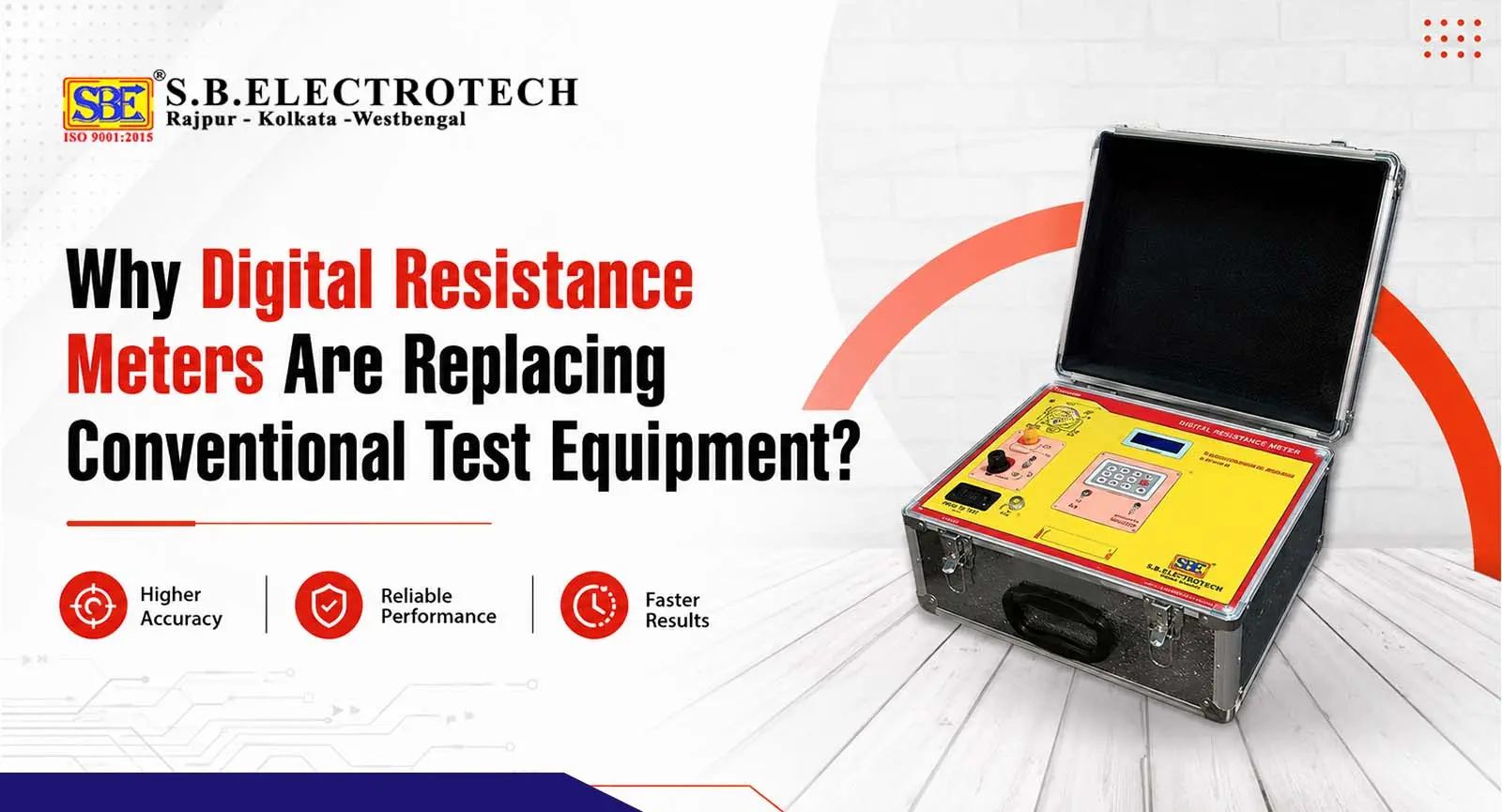
Every electrical connection carries some resistance, and that part is unavoidable. What decides whether a system runs safely or heads toward failure is whether that resistance stays within an acceptable range. For decades, maintenance teams checked this with basic multimeters or conventional test equipment, tools that worked, but only up to a point. They struggled with temperature swings, gave readings that needed a trained eye to interpret, and rarely held up well outside a controlled setting. That gap is exactly why the digital Resistance Meter has taken over so much of this work. It doesn’t just measure resistance; it measures it consistently, displays it clearly, and survives the kind of field conditions conventional equipment was never built for. If you’re maintaining switchgear, transformers, or busbars and wondering why so many teams have moved away from older test gear, you’ll get the answer in this article.
What a Resistance Meter Is Measuring?
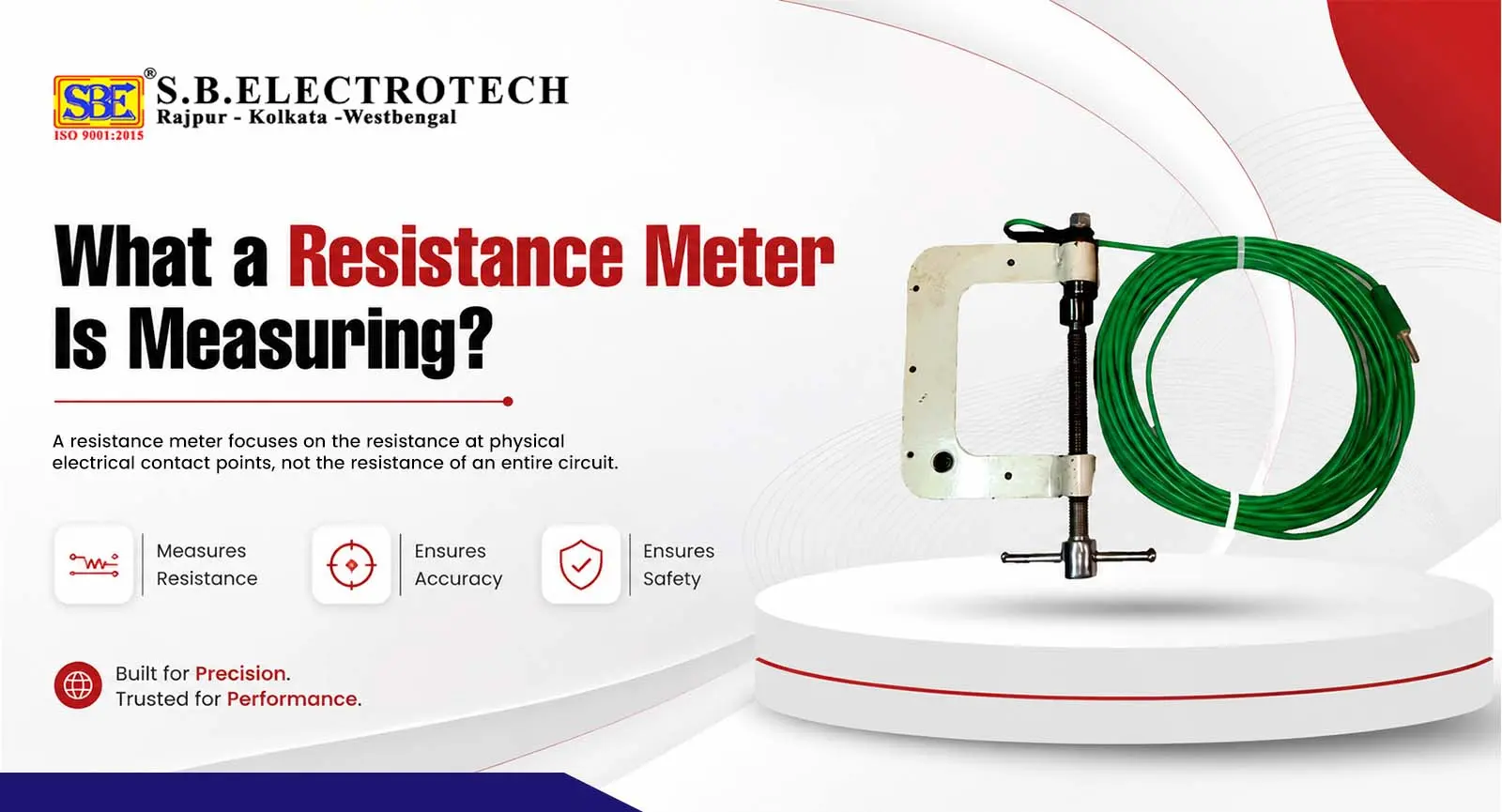
Before comparing old and new equipment, it helps to know what’s being tested. A resistance meter focuses on the resistance at physical electrical contact points, not the resistance of an entire circuit. These contact points are where most overheating and power loss happen. A steady current gets passed through the joint, the meter reads the resulting voltage drop, and from that, it calculates resistance, usually landing somewhere in the micro-ohm to milli-ohm range.
That number tells a maintenance team a lot. A joint with resistance well within the manufacturer’s healthy range is doing fine. One that’s drifted upward is quietly generating extra heat, and that heat accelerates further deterioration. Left unchecked, it’s a cycle that ends in arcing, tripped breakers, or unplanned downtime.
Where Conventional Test Equipment Starts Falling Short?
Conventional resistance meters work on a fairly simple principle rooted in Ohm’s law, and for a long time, that was enough. But out in the field, a few practical problems keep showing up:
- Temperature sensitivity– Readings can shift depending on ambient conditions, which affects consistency
- Limited portability– Older designs weren’t built with field mobility in mind
- Offline-only testing– No way to log, transfer, or review data without manual note-taking
- Wiring faults that go unnoticed– A poor connection in the meter’s own voltage circuit can quietly produce a false reading near zero, misleading a tester who doesn’t catch it
That last point matters more than it seems. A technician without deep field experience might record a faulty reading as a legitimate one, delaying the fix and adding unnecessary downtime to the work.
What Changes With a Digital Resistance Meter?
1. Accuracy You Can Trust
Digital models are built around precise, stable measurement circuits. Features like a 1 µΩ resolution and true four-terminal measurement mean the reading reflects the actual joint, not noise from the test leads or surrounding electrical interference. Even in environments with strong interference, a good digital unit holds its last displayed digit steady, typically within a very tight error margin.
2. Readings That Don’t Need Interpretation
Instead of squinting at a needle or doing mental math, digital resistance meters display results directly on an LCD or LED screen. There’s no ambiguity about what the device is reporting. Some models go a step further with built-in printers, so test results print directly from the instrument on-site. That single feature removes a common source of error: manual transcription mistakes when someone copies a reading into a maintenance log by hand.
3. Built for the Field, Not Just the Lab
Digital units are generally compact and lightweight, designed to travel with the equipment rather than the other way around. That matters when you’re testing switchgear in a substation or busbars in an industrial plant, not a bench in a controlled lab. Long service life is also a practical concern here; components inside these meters are chosen to reduce the impact of temperature on measurement results, and rugged connectors help the unit hold up under vibration and repeated field use.
Conventional vs Digital: A Quick Comparison
| Factor | Conventional Test Equipment | Digital Resistance Meter |
| Reading clarity | Needs interpretation | Direct digital display |
| Temperature stability | Sensitive to ambient shifts | Built to minimise drift |
| Portability | Often bulky | Compact, field-ready |
| Documentation | Manual note-taking | On-instrument printing (select models) |
| Fault detection | Wiring issues can go unnoticed | Designed for consistent, reliable output |
How the Four-Wire Method Changed the Game?
A lot of the accuracy improvement in digital meters comes down to the four-wire, or true four-terminal, measurement method. In simple terms, it separates the current-carrying leads from the voltage-sensing leads, so the resistance of the test leads themselves doesn’t get mixed into the final reading. The meter ends up measuring only the resistance of the actual joint being tested. This is what allows a digital resistance meter to catch problems a basic handheld tool would completely miss, things like faint corrosion or a bolt that’s just slightly loose, long before they turn into a visible failure.
Picking the Right Model for Your Application
Not every application needs the same specification. S.B. Electrotech manufactures a range of contact resistance meters to match different testing needs:
- CRM 100– The standard model, compact and accurate, suited for general field testing across electrical contacts.
- CRM 100P– Builds on the CRM 100 with a built-in printer, simplifying on-site documentation.
- CRM 200– Delivers a higher 200 Amp DC constant current output, useful for larger contacts and heavier-duty equipment.
Choosing between them usually comes down to testing current requirements, whether on-site printing matters for your maintenance records, and the scale of the equipment being tested.
Where These Meters Get Used?
Digital resistance meters have found steady use across:
- Substation switchgear and circuit breakers
- Transformers and busbars
- Industrial power connections and generators
- Cable junctions and switch devices
Testing frequency depends on the equipment. Substation switchgear is often tested annually or after each operation cycle, while lower-criticality industrial connections may follow a longer schedule based on manufacturer recommendations and relevant sector standards.
Conclusion
Testing electrical contacts isn’t just a maintenance checkbox; it’s what catches a small problem before it becomes an expensive one. Conventional test equipment did the work for a long time, but its limitations around accuracy, portability, and documentation are exactly why so many teams have shifted to digital tools. A reliable Resistance Meter takes the uncertainty out of the process and gives maintenance teams numbers they can act on. If your team is still relying on older equipment, it might be worth talking to S.B. Electrotech about which digital model fits your testing needs.
FAQs

S.B.ELECTROTECH
S.B. Electrotech is a company that specializes in manufacturing of electrical and electronic testing and measuring instruments. With years of expertise in this field, we ensure to provide high quality, safe, and sustainable products.
