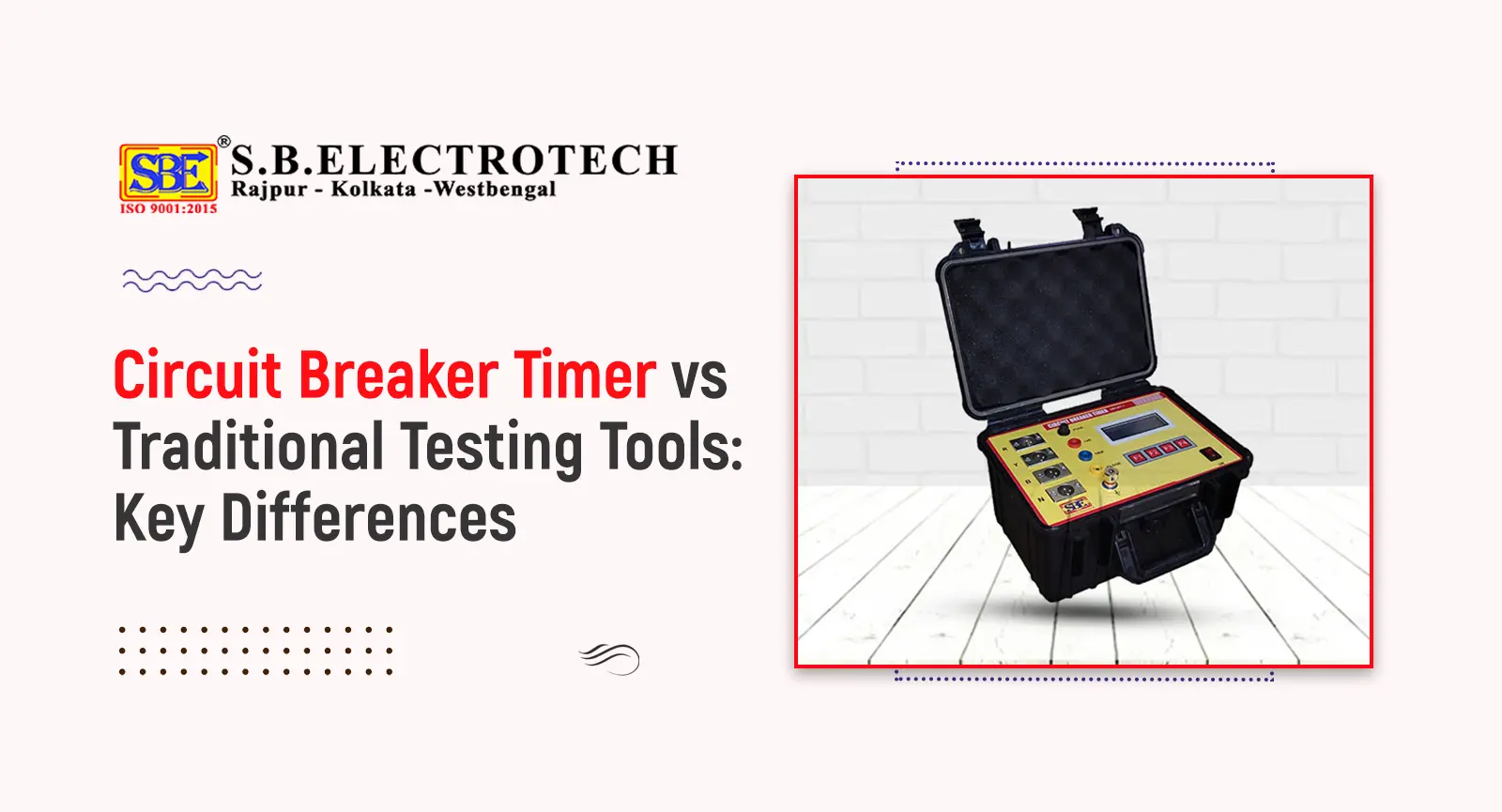
In electrical maintenance, testing circuit breakers ensures they protect systems reliably by interrupting faults quickly. Circuit breaker timers offer automated precision for measuring open and close times, while traditional tools depend on manual observation and basic instruments. This post explores their key differences to help you decide what’s best for your testing needs.
What Is a Circuit Breaker Timer?
A circuit breaker timer is a specialized device that connects to breaker contacts via sensors or transducers. It precisely measures timing for operations like opening, closing, or close-open cycles, often down to milliseconds. These tools capture details such as pole timing discrepancies, contact bounce, and travel distances, providing instant digital results on a screen or via connected software. Setup involves clipping on sensors, selecting the test mode, and triggering—making it straightforward for substation or industrial use on types like SF6, vacuum, or air-blast breakers.
Traditional Testing Tools Explained
Traditional methods rely on hands-on tools like stopwatches, multimeters, oscilloscopes, and meggers. Technicians manually initiate the breaker trip, time the contact separation visually or with probes, and check resistance or insulation by hand. This approach involves physical inspection—listening for mechanical sounds, feeling for drag, and noting observations on paper. It’s a proven, familiar process used for decades across low- to high-voltage applications.
Key Differences Explained:
Accuracy and Speed
Timers deliver superior accuracy, detecting variations as small as 0.1 ms that indicate issues like weak springs or sticky latches. Traditional timing depends on human reaction times, which can introduce errors of 10-20 ms, especially under fatigue or poor lighting. Speed is another edge: a timer completes a full three-phase test in minutes with automated signals, while manual methods take hours due to repeated triggers and recordings. Timers also store data digitally for trend analysis over time, unlike scattered manual notes.
Safety and Ease of Use
Safety stands out with timers, as remote sensors keep workers away from live high-voltage areas, minimizing shock or arc flash risks. Many include built-in power supplies for safe coil testing without hot work. Traditional tools require closer proximity—holding probes or watching contacts directly—which heightens exposure in energized environments. For ease, timers feature user-friendly interfaces, pre-set test routines, and wireless data transfer, allowing quick training for teams. Manuals demand experienced technicians who interpret results subjectively.
Portability and Practicality Breakdown
Timers are designed for field use, with compact, battery-powered units that withstand harsh conditions like dust or extreme temperatures. They integrate multiple functions into one kit, reducing the gear to carry. Traditional setups involve multiple bulky tools—stopwatches, leads, scopes—making transport cumbersome for remote sites. Timers excel in repeatability, running consistent tests without variation, while manuals can differ between operators.
Pros of Circuit Breaker Timers:
- High precision and detailed diagnostics.
- Quick, automated testing.
- Digital records for audits and trends.
- Enhanced safety through remote operation.
Cons of Circuit Breaker Timers:
- Requires initial setup familiarity.
- Best for frequent, complex tests.
Pros of Traditional tools:
- Simple, intuitive hands-on feedback.
- Flexibility for basic inspections.
- No reliance on electronics.
Cons of Traditional Tools:
- Prone to human inconsistencies.
- Time-consuming for thorough checks.
- Limited data retention.
Circuit Breaker Timer Vs. Traditional Tools: When to Choose Each
Opt for a circuit breaker timer in high-stakes settings like utilities or large facilities, where precise timing prevents outages and meets strict standards. Traditional tools suit occasional, low-voltage maintenance or scenarios needing tactile assessment. Many teams blend both—using timers for timing and manuals for visual checks. The choice hinges on your workflow: prioritize precision for critical assets or simplicity for routine tasks.
In the end, circuit breaker timers bring efficiency and reliability to modern testing, bridging the gap from manual guesswork. They make maintenance faster and safer without losing the core insights technicians value. Consider your setup and upgrade where it counts—reliable breakers keep power flowing smoothly.