
Introduction
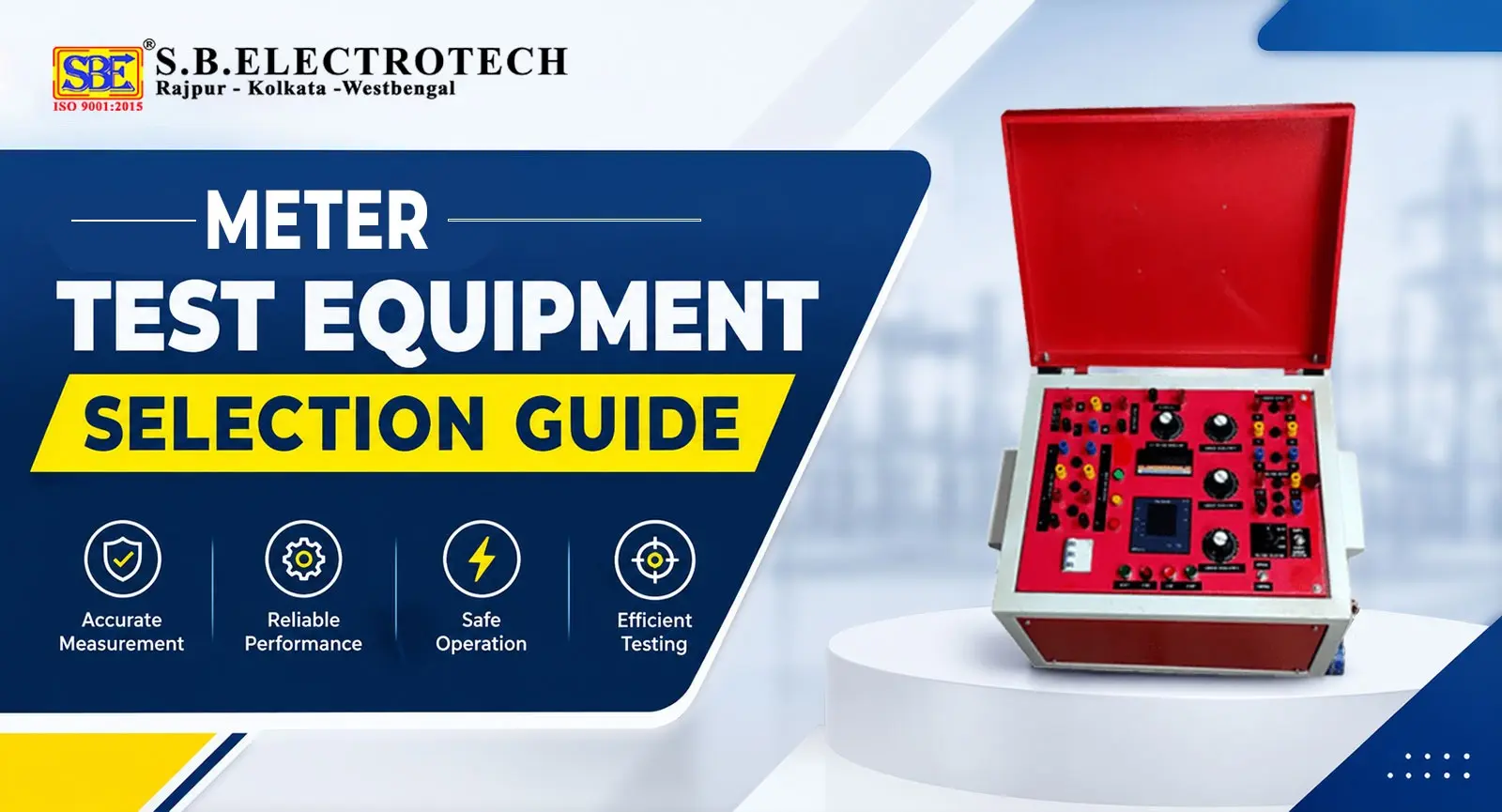
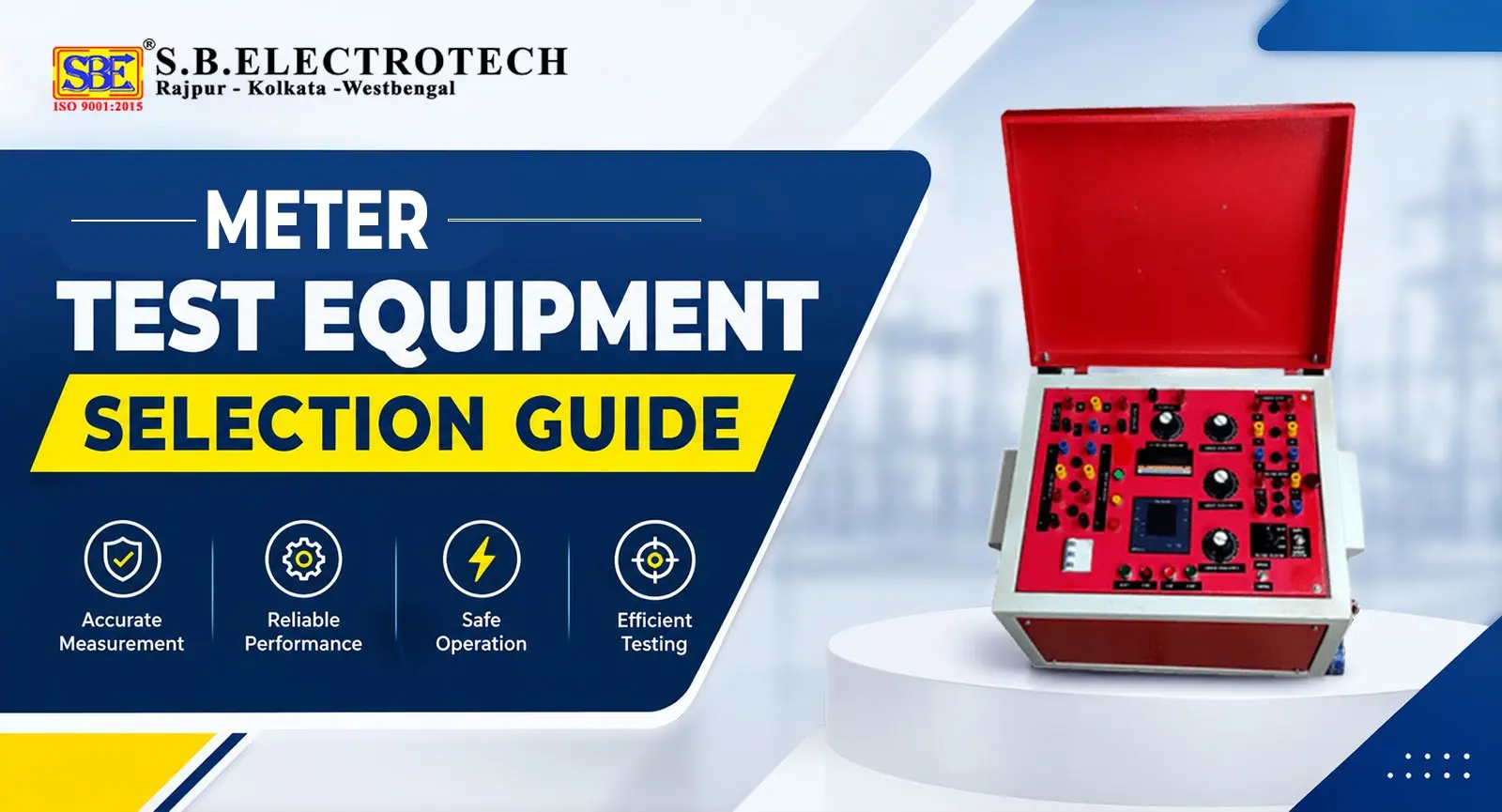
Meter test equipment is the setup that decides whether an energy meter’s reading can be trusted. At its simplest, it’s a reference meter paired with a controlled power source, built to check a meter’s accuracy against a value that’s already known and certified. Utilities run new meters through it before installation, manufacturers test units as they come off the line, and calibration labs use it whenever a meter’s accuracy gets questioned. The equipment ranges from small single-phase benches for a handful of residential meters to automated systems that push thousands of units through testing in a day. This article covers what meter test equipment does, the types worth knowing, the standards it has to meet, and how to keep it accurate once it’s on your floor.
What Is Meter Test Equipment?
Meter test equipment is built around two core pieces: a reference standard and a power source that feeds identical electrical conditions to both the reference and the meter under test. The reference standard is a meter too, just one built to a far tighter tolerance than the meters it’s checking. When both units see the same voltage and current, whatever gap shows up between their readings is the meter’s error. That error either sits inside the meter’s rated accuracy class or it doesn’t.
How Meter Test Equipment Works
The sequence stays consistent across most setups, whether it’s a factory bench or a field kit. This test equipment works in the following ways:
- A programmable power source applies a known voltage and current to the meter under test and the reference standard at once.
- The reference standard records the true energy value for that load, since it’s built to a tighter accuracy class.
- The meter under test records its own reading, and the system compares both values.
- The gap becomes a percentage error, checked against the meter’s rated accuracy class for a pass or fail.
Meters with internally closed voltage and current circuits need close-link testing, which isolates those circuits electronically instead of opening physical links.
Types of Meter Test Equipment
Not every facility needs the same setup, and the right choice is dependent on the volume and where the testing happens. Different types of meter test equipment are:
- Single-phase test benches handle residential and light commercial meters, often running several positions in parallel for batch testing.
- Three-phase test benches test industrial meters under balanced or unbalanced loads that single-phase equipment can’t reproduce.
- Portable reference standards travel with field technicians, testing a meter where it’s installed instead of pulling it for lab testing.
- Fully automatic test systems suit manufacturers running high volumes, moving hundreds of meters through a cycle with barely any manual handling.
A lab checking a dozen disputed meters a month has little in common with a factory running thousands through daily quality control.
Industry Standards Meter Test Equipment Should Meet
Buying equipment without checking standards compliance is a shortcut that often backfires, usually when a regulator asks for proof. The following are the different types of meters and where they are used:
- IEC 62053-21 and 62053-22 cover static energy meters outside North America, setting accuracy classes 1 and 2 for direct meters and 0.2S and 0.5S for CT-connected ones.
- ANSI C12.1, which absorbed the older C12.20, sets the North American equivalent and defines 0.1, 0.2, and 0.5 accuracy classes.
- Blondel’s Theorem underlies most of these standards, and equipment testing multi-element meters needs to account for it correctly.
- EN 50470, used across Europe, builds on IEC standards and adds requirements tied to the Measuring Instruments Directive.
A bench certified against one of these frameworks produces results an auditor can rely on.
Maintaining Meter Test Equipment
Test equipment doesn’t stay accurate forever just because it was accurate on day one, and skipping upkeep is how a trusted bench turns unreliable. These are some of the testing equipment:
- Recalibrate the reference standard on a fixed schedule, since drift in the reference undermines every test it runs afterwards.
- Keep connectors and terminals clean, since contact resistance on ageing hardware introduces small errors that add up over hundreds of tests.
- Store portable units properly between fieldwork, since temperature swings and rough handling shift calibration faster than steady lab conditions would.
- Log every calibration and repair of your meter test equipment, since that history is often the first thing an auditor asks to see.
None of this takes much time, but it’s the difference between test data people trust and data that gets questioned.
Key Features to Look For
A handful of specifications separate equipment that stays reliable for years from equipment that starts drifting fast. Here are some of the major key features to look at before you decide to select one single meter:
- Reference accuracy should be at least four times tighter than the meters being tested, so the reference isn’t adding error.
- Test position count decides throughput, mattering far more to a manufacturer than to a lab handling occasional disputes.
- Close-link and open-link compatibility in one unit avoids running two separate systems for two-metre designs.
- Data logging and reporting determine how easily results get traced back during an audit.
Applications to Look For
Meter test equipment shows up anywhere a meter’s accuracy has to be proven rather than assumed. These are some of the applications to look for:
- Utilities test new meters before installation to confirm regulatory compliance.
- Manufacturers test every unit off the line as a quality control step.
- Calibration labs test meters needing certified, traceable documentation.
- Field crews use portable testers to resolve billing disputes without disconnecting service.
Common Mistakes to Avoid
Most inaccurate test results come down to setup and maintenance gaps rather than a faulty unit. These are some of the most common mistakes that one can make while buying meter test equipment:
- Using a reference standard whose accuracy class sits too close to the meter under test, burying the actual error inside measurement uncertainty.
- Letting reference standard recalibration slide, allowing results to drift for months unnoticed.
- Skipping warm-up time before testing, producing unstable readings right when a test begins.
- Testing close-link meters on equipment not built for internal isolation, risking damage to a working meter.
Conclusion
Choosing the right meter test equipment isn’t just a technical decision; it’s an investment in accuracy, safety, and long-term reliability. Whether you need precise calibration, robust performance, or industry-compliant testing, selecting equipment tailored to your specific requirements makes all the difference. With trusted providers like SB Electrotech, you gain access to reliable, high-quality meter test solutions backed by expertise and innovation. Don’t compromise on precision, invest wisely, prioritise durability, and partner with a name you can trust. Make an informed choice today, and power your operations with confidence and efficiency.
FAQs

S.B.ELECTROTECH
S.B. Electrotech is a company that specializes in manufacturing of electrical and electronic testing and measuring instruments. With years of expertise in this field, we ensure to provide high quality, safe, and sustainable products.
